
Key Takeaways (TLDR)
- Enter every sales call ready to listen, not just to pitch
- Spell out what will happen on the call to remove anxiety
- Use permission-driven language; let the client feel in control
- Draw out problems through open-ended questions (not assumptions)
- Embrace silence—trust clients to process and decide
- Aim for clarity (a clear yes or no), not persuasion
If selling your services feels awkward, you’re not alone. Most business owners I talk to have some horror story about a sales call gone wrong. Where things got pushy, trust flew out the window, and nobody left feeling good. For a lot of folks, sales still feels like something you do to a person instead of something you build with them.
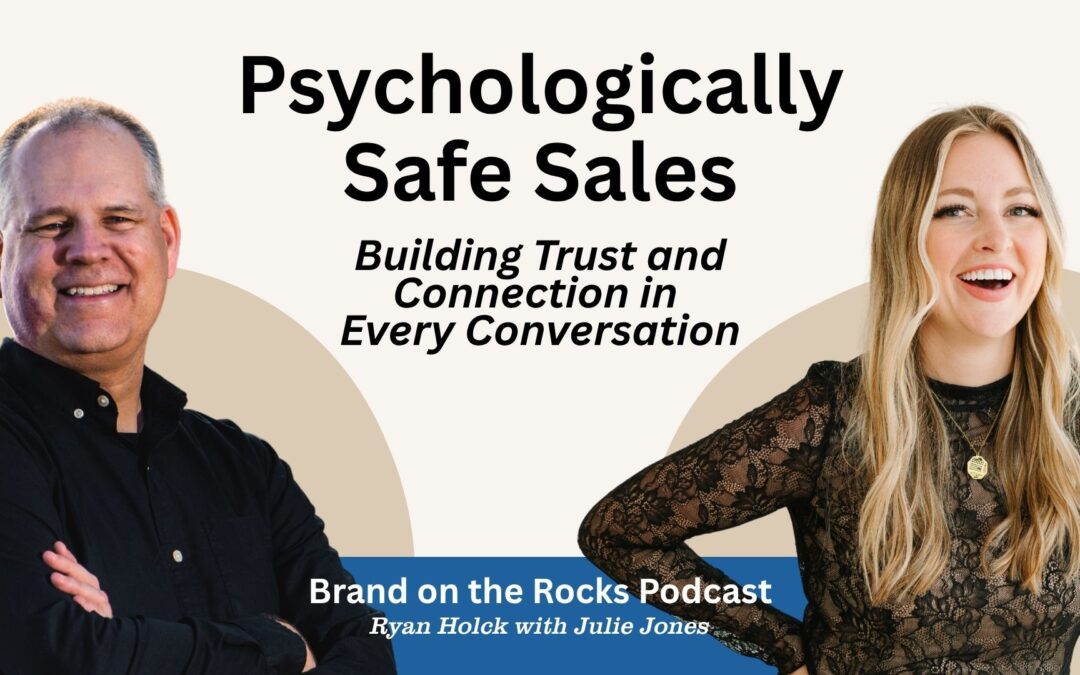
But what if there’s a better way? One that helps you create true connection before the pitch, and leaves both sides feeling confident? This week I sat down with Julie Jones, a sales consultant who has re-engineered the entire sales process around one big idea: psychological safety.
Julie’s “psychologically safe sales” method isn’t just another script. It’s a refreshingly human approach to sales that ditches high-pressure tactics in favor of trust, clarity, and genuine conversation. If you want clients who keep coming back and refer their friends without a second thought, read on.
Episode Overview
Our conversation focused on rethinking traditional sales, especially for service providers who dread feeling like “that salesy person.” We looked at why most old-school sales training misses the mark, how psychological safety actually erases objections before they happen, and the step-by-step frameworks Julie uses to transform sales calls from stressful to natural.
By the end of this episode, you’ll see:
- Why building trust beats persuasion every time
- How to break “salesperson mode” and show up as yourself
- The keys to handling objections (without ever “handling” them)
- How to set up calls so clients feel safe and supported from the first moment
- Practical ways to use curiosity, clarity, and consent for authentic connection
Let’s break it down.
Insight #1: Trust Comes Before the Pitch
A key theme that emerged was that most entrepreneurs have a story about turning into a different person as soon as the “sales hat” goes on. Julie revealed that the root of that discomfort is simple, traditional sales approaches ignore the people at the center of the conversation.
She challenged this idea that sales means talking more, convincing harder, or performing. Instead, the goal should be to:
- Listen first, talk later
- Treat every sales call as the start of a relationship, not a transaction
- Show up with your real personality, not your “sales persona”
When your focus shifts from pitching to connecting, clients lower their guard and trust flows naturally.
Insight #2: Psychological Safety Is a Game-Changer
One concept discussed was psychological safety—not just in HR or team management, but inside every sales call. Julie explained it like this: when prospects feel safe sharing their true objections, hesitations surface early. You don’t get hit with a last-minute no, because the real worries have already been talked through.
Real-world practices for creating this:
- Enter every call with curiosity, not an agenda
- Make it crystal clear what’s going to happen on the call (no surprises)
- Invite permission at every step (“Is it okay if I ask some questions?”)
- Let clients know up front that “no” is perfectly acceptable
This simple shift removes pressure, dissolves resistance, and builds a container where clients feel heard, not hustled.
Insight #3: Let Clients Name Their Own Problem
The discussion explored the power of open-ended questions. Julie’s framework prompts clients to articulate their problem and their perfect outcome, in their own words. Why? Because when people say it themselves, they believe it. When you try to tell them what’s wrong, the skeptic shows up.
Julie’s tips:
- Start with surface facts (“What made you schedule the call?”)
- Move gently into probing questions (“What’s holding you back from fixing this?”)
- Paint a picture (“If you could wave a magic wand, what would be different three months from now?”)
By holding space and reflecting back your prospect’s words, you build massive trust—and set up a yes that feels like their own idea.
Insight #4: Silence (and Certainty) Are Your Secret Weapons
Several points were raised, including the misconception that handling objections means talking faster or harder. In reality, silence is one of the most powerful tools you have. Julie shared that after stating her price, she’ll sometimes sit quietly while a client thinks, even if that means ten full minutes of silence.
Practical tactics:
- Lay out the agenda before starting (certainty creates safety)
- Ask for permission to move forward
- After each big question (or price reveal), pause and let the client process—don’t fill the space with nervous chatter
- Trust the discomfort; your job is to hold space, not to rescue the conversation
Clients can feel when pressure is off. They can also sense when you’re confident enough to let them think.
Insight #5: Your Sales Process Sets the Tone for Everything That Follows
A key insight from the episode is that however you start a relationship is how it will continue. If you win a client through high-pressure tactics, what shows up later is buyer’s remorse, low retention, and a wall that never quite comes down. Conversely, if you onboard through trust and consent, you’re beginning a partnership built to last.
Julie even cited hard numbers: more than 80 percent of her revenue comes from existing clients who stick around, buy again, and refer others, all because the foundation was set from the very first conversation.
Notable Quotes
“Selling is not about persuasion, it’s about building trust.”
“When someone feels safe enough to say what’s really going on, objections come up early, and they’re a gift, not a battle.”
“Let go of the need to convince anyone. Your real job is to lead people to clarity.”
Why This Conversation Matters
Entrepreneurs, consultants, and service providers are all in the business of building relationships. Yet, for too long, sales has felt like stepping into a ring. The best salespeople don’t manipulate, pressure, or even close. They invite, clarify, and connect.
Psychological safety isn’t fluff. It’s a practical, learnable set of actions that leads to better clients, longer-term trust, and more enjoyable work. When you build your sales system around people, not persuasion, you cut through the noise and become the partner your prospects have been searching for.
If you’ve ever felt resistance or dread before a sales call, this approach is your roadmap to making sales feel natural, and building a reputation people rave about.
About the Guest
Julie Jones is a sales expert, consultant, and creator of the Psychologically Safe Sales Method. She helps service-based business owners ditch outdated persuasion tactics and embrace a trust and relationship-first approach. Her frameworks have helped hundreds of entrepreneurs find confidence in selling—and create clients who stick for the long haul.
Connect with Julie Jones
Website: juliejones.coach
IG: https://www.instagram.com/juliejones_coach
Linkedin: www.linkedin.com/in/julie-jones-coach
FB: https://www.facebook.com/juliejonessalesconsultant/
Listen & Follow the Podcast
If you want to see these ideas in action, watch the full episode on YouTube. Subscribe to Brand On The Rocks wherever you get your podcasts. Share this episode with another entrepreneur who needs a little sales clarity.
Real connections build brands. Trust is your best sales strategy. Keep distilling your story until it’s crystal clear.