
Why do you do what you do?
It’s a simple question, but when someone puts you on the spot — in a meeting, at a networking event, maybe even around a campfire — too often the answer slips through your fingers. You stammer through the details, hoping you sound interesting, but deep down, you wonder: do people really get why I’m in this business?
You’re not alone. Every founder, leader, and small business owner struggles to share their “why” with conviction. But here’s the truth: your origin story isn’t just your elevator pitch. It’s the key to creating a brand people actually remember.
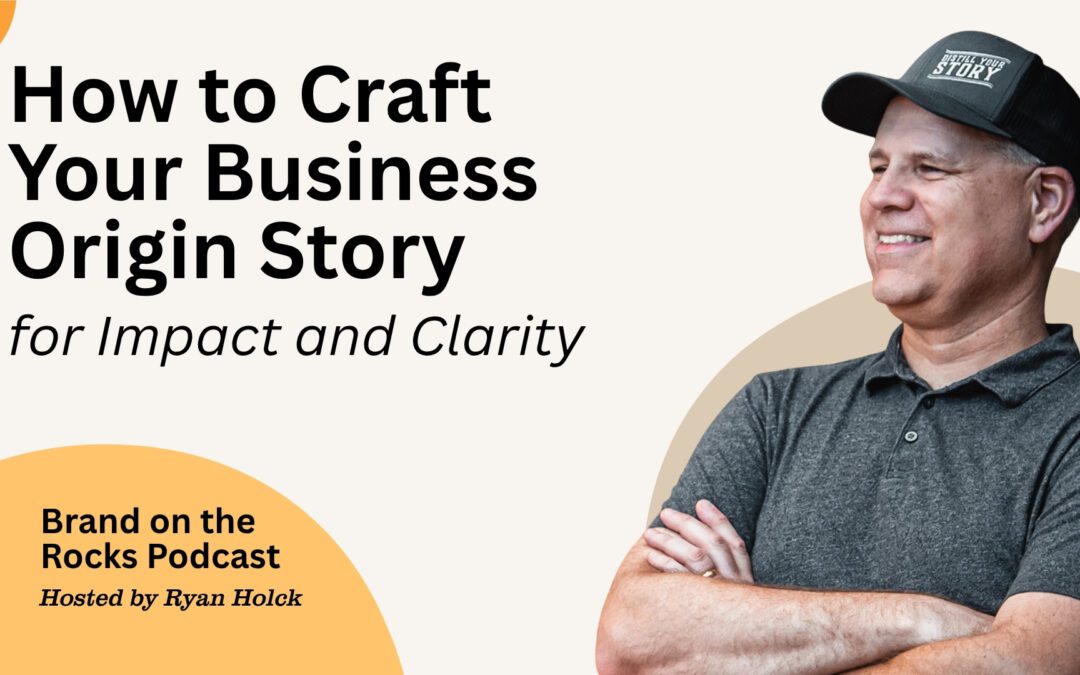
This week on Brand On The Rocks, we’re flipping the script on business storytelling. I’m Ryan Holck, brand strategist and founder of Distill Your Story, and I’m pulling back the curtain on the real frameworks entrepreneurs use to craft stories their teams, clients, and communities can actually repeat.
Ready to clarify your story? Let’s get started.
Episode Overview
In this episode, we dig into the real reason most business origin stories fall flat. It’s rarely because the story isn’t important, it’s because it’s too long, too tangled, or too close to home.
You’ll learn:
- Why stories are the real currency of your brand’s reputation
- How to craft an origin story that’s simple and shareable (without losing the heart)
- Practical frameworks for breaking your “why” into clear, repeatable language
- The difference between a forgettable pitch and a story people can tell for you
Whether you’re pitching your startup, leading a team, or just tired of blank stares when you explain your business, these frameworks will sharpen your message so your story finally sticks.
Insight #1: Clarity Always Beats Complexity
Let’s face it. Most businesses stumble when asked to explain what they do and why it matters. You might have the passion, but if your story isn’t clear, your audience will fill in the blanks (and they rarely get it right).
The fix? Strip your origin story down to its essence.
- Choose one story to tell. Don’t cram in your whole resume
- Decide exactly what lesson or message you want people to take away
- Cut the unnecessary details, even if they feel meaningful to you
- Aim for a version that someone else could repeat the next day (not just you)
Think of your story less like a memoir and more like your favorite campfire story: short, compelling, and easy to pass around.
Insight #2: Frameworks Make Your Story Repeatable
Stories only stick if they’re designed for sharing. I break origin stories down using a straightforward framework:
Six steps to a brand story worth repeating:
- Pick one core story (not five)
- Know exactly what your story proves
- Brain-dump every detail without editing
- Distill to the essentials. Circle what matters to your audience
- Adapt the delivery for different contexts (short, medium, long)
- Repeat your story often (repetition = memorability)
Here’s the Mad Lib formula to get you started:
“I was [catalyst] when I noticed [problem]. I wanted to [motivation], but [barriers] stood in the way. So I chose [solution], which changed [what changed]. I want you to know [takeaway].”
Keep it simple. Your story isn’t about remembering every word. It’s about knowing which moments matter most, so you can adapt the rest to your audience.
Insight #3: Adapt, Don’t Recite. Make Your Story Fit the Room
Ever notice how the best storytellers never tell a story the same way twice? That’s by design. It’s not about rote memorization or corporate scripts. The goal is to own your story so well that you can flex, shorten, or expand depending on where you are. Whether you’ve got two minutes on a podcast, a quick intro at a networking event, or a deep dive for your About page.
- Anchor to a few irreplaceable facts or moments
- Add or subtract details based on who’s listening and how much time you have
- Keep the heart of the story unchanged, even if the details shift
This is how you keep your story feeling fresh and real, every single time.
Insight #4: Your Story’s Real Power Is in Repetition
People won’t remember your story if they only hear it once. Clarity and consistency are what make a message stick.
- Find the version of your story that’s easy to repeat
- Say it at every opportunity: onboarding, marketing, team meetings, interviews
- Trust that real impact comes from “famous for one story,” not “forgettable for many”
Even the best stories start to blend together when they’re too complex. Cut back, repeat often, and watch how your audience starts spreading your message for you.
Notable Quotes
“In the absence of a clear story, people tend to fill the gaps. They tend to either make stuff up, which is usually not really good, or they tend out of confusion to kind of hem and haw.”
“You don’t need new stories every time you sit in front of a group… We need a few core stories that we can repeat at volume, but in different ways.”
“Most origin stories don’t fail because they’re unimportant. They fail because they’re too long, too detailed, or too close to the person telling them.”
Why This Conversation Matters
Entrepreneurs, consultants, and small business owners live or die by how well they communicate their vision. If your origin story is fuzzy, long-winded, or different every time, you’ll lose momentum before you ever get a chance to win hearts.
A sharp, consistent origin story isn’t just for the website. It’s the foundation of trust — it’s how people refer you, how your team gets aligned, and how your brand gets remembered when the world scrolls past.
Take the frameworks from this episode, simplify your message, and give yourself (and your audience) the gift of clarity.
Your story is your competitive edge. Make it repeatable.
Listen & Follow the Podcast
Ready to make your story crystal clear?
Watch the full episode on YouTube, subscribe to Brand On The Rocks on your favorite podcast platform, and share this episode with a business owner who needs to sharpen their origin story.
Clarity isn’t just a nice-to-have — it’s the engine behind every memorable brand. Take your next step today.